
 USA
USA





















Bicycle Helmet Buyers Guide – Road, MTB & Downhill
|
|
Time to read 4 min
Table of Content
Summary: Choosing the right helmet starts with fit: measure the circumference of your head above youreyebrows and use a size chart to find the correct range; the shell should sit level and feel snugwithout causing pressure spots. Adjust pads and straps so thefront sits just above your eyebrows and the Y-straps meet below your ears[2]【629141583523542†L52-L54】. Once the fit is dialled, think about where and how you ride—lightweight road helmets maximise airflow and speed, trail or half-shell lids extend coveragedown the back and include visors, and full-face helmets add a wrap-around chin bar for gravityriding[4]【31023594693681†L358-L361】. Modern lids often include MIPS (Multi-DirectionalImpact Protection System) or similar slip-plane technologies that allow the foam liner to rotateslightly during an angled impact to reduce harmful rotational forces[6]【327382885214769†L352-L359】. Pick the style and features that match your riding andbudget, and don’t forget to replace your lid every few years or after a crash.
Helmets - Collection
Why fit matters
A helmet can only protect you properly when it stays in place. Start by wrapping a flexible tapemeasure or string around the widest part of your head about one inch above your eyebrows;compare that number with the manufacturer’s size chart to choose the correct size[1]【485785947719510†L13-L21】. When you try on a helmet it should make even contact allaround your head and sit low; swap out the included pads or adjust the retention dial until theshell doesn’t rock from side-to-side[1]【485785947719510†L20-L23】. Position the front rimjust above your eyebrows so you can barely see it when you look up, then adjust the side strapsso the Y-shape meets just below your ears and tighten the chin strap until it lightly pulls thehelmet down when you open your mouth[3]【629141583523542†L63-L66】. If the helmetmoves more than an inch when you shake your head, keep fine-tuning the pads and strapsuntil it feels stable.
What helmet is right for you?
Helmets fall into three broad categories:
Road/XC helmets
Road and cross-country riders prioritise low weight, ventilation and aerodynamic efficiency.These lids are designed to be light and sleek with large vents to maximise airflow on longclimbs[4]【31023594693681†L358-L361】. They often omit visors to maintain a clean profileand are shaped to cut through the air. Because road crashes typically involve sliding alongpavement rather than tumbling, road helmets focus on protecting the top of your head whilekeeping you cool.
Trail/half-shell helmets
Trail, all-mountain and enduro helmets—often called half-shell lids—offer deeper coverage atthe back and sides of your head because off-road spills can send you tumbling in anydirection[4]【31023594693681†L358-L361】. They have smaller vents than road lids to preventbranches and debris from entering but still provide good airflow[5]【31023594693681†L490-L497】. Most include a visor to shield your eyes from sun, rain and roost and may featuremounts for an action camera or goggle-retention clips. Half-shell helmets balance protectionand ventilation, making them ideal for single-track and general mountain biking.
Full-face helmets
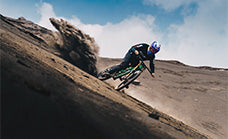
Gravity and downhill riders need maximum protection. Full-face helmets feature awrap-around chin bar and extended coverage around the jaw and ears to guard against hardimpacts[5]【31023594693681†L490-L497】. The extra structure adds weight and reducesventilation, so these lids are best for bike-park laps, racing and steep descents rather than longclimbs. Some models are convertible, allowing you to remove the chin bar for pedalling andthen reinstall it for the descent. A full-face lid isn’t necessary for casual rides, but if you spendyour weekends smashing downhill runs or dirt jumps, the extra protection is worth the weightpenalty.
MIPS and rotational impact protection
You’ve probably noticed a yellow “MIPS” sticker on many modern helmets. MIPS stands forMulti-Directional Impact Protection System—a plastic, low-friction layer inside the helmetthat helps redirect rotational forces during oblique impacts[6]【327382885214769†L352-L359】. Most helmets are tested for straight-on impacts, but real-world crashes often involvehitting the ground at an angle, causing the head to twist. The MIPS slip-plane allows thehelmet’s impact-absorbing foam to rotate independently from your head by about 10–15 mm,reducing the rotational motion transferred to your brain[7]【327382885214769†L379-L389】.Research suggests that rotational forces are a common cause of concussions and severe braininjury[8]【327382885214769†L410-L417】, so technologies like MIPS, SPIN or WaveCel aim toprovide an extra margin of safety. While no helmet can guarantee injury prevention, choosing alid with a rotational-impact system offers peace of mind, especially for trail and gravity riding.The slight price premium is small compared with the potential benefit.
How do I measure my head for a helmet?
Wrap a soft tape measure around the widest part of your head—about one inch above youreyebrows—and read the circumference. If you don’t have a tape, use a piece of string andmeasure it against a ruler. Compare the number to a sizing chart and try on helmets in thatrange[1]【485785947719510†L13-L21】.
Where should the helmet sit on my head?
The helmet should sit level with the front rim just above your eyebrows so you can barely see itwhen you look upward[2]【629141583523542†L52-L54】. Adjust the internal fit system or padsto lower or raise the shell until it feels comfortable and stable.
How tight should the straps be?
Use the eye-ear-mouth test: the side straps should meet just below your ears, and the chin strapshould be snug so that when you open your mouth wide the helmet pulls down slightly[3]【629141583523542†L63-L66】. If the helmet can be pushed more than an inch off level, tightenthe straps or adjust the fit.
Do I need a helmet with MIPS?
Rotational-impact systems like MIPS add a slip plane between the shell and liner to reducerotational forces in certain impacts, which are a common cause of concussions[8]【327382885214769†L410-L417】. They generally improve protection and peace of mind,especially for trail and gravity riding. If you ride regularly off-road or want the latest safetytech, the small cost increase is worth it.
When should I replace my helmet?
Most manufacturers recommend replacing a helmet every five to seven years or immediatelyafter a crash. Over time UV exposure and sweat degrade the foam and straps, reducingeffectiveness. Inspect your helmet regularly for cracks or delamination.

Jared Morgan
BikesOnline....


