
 USA





















What Size Bike Does a 10-Year-Old Need?

Finding the right bike size for a 10-year-old starts with measuring your child, not relying on their age alone. Most 10-year-olds fit a bike with 20-inch or 24-inch wheels, but height, inseam and riding style determine which size feels safe and comfortable. This guide walks you through the measurements, fit checks and choices that matter most.
What Size Bike Does a 10-Year-Old Typically Need?
Most 10-year-olds need a bike with 20-inch or 24-inch wheels, depending on their height and inseam. Wheel size describes the diameter of the tyre and is the main sizing measure used for children’s bikes. As a guide, 20-inch wheels suit riders approximately 120 to 135 cm tall, while 24-inch wheels suit riders approximately 130 to 150 cm tall. These ranges overlap, so your child’s measurements and fit on the bike should take priority.

If your child falls within that overlap, compare how they stand over and reach each bike rather than choosing by the number on the wheel. You can browse 20-inch wheel bikes and 24-inch wheel bikes to see the two size categories, then check the fit of any bike you are considering.
Why Height and Inseam Matter More Than Age
Two children can both be 10 years old and have very different heights and leg lengths. That is why age gives you a starting point, but cannot tell you whether a particular frame will fit. Height helps narrow the wheel-size range; inseam helps you judge whether your child has enough clearance to stand over the bike and put their feet on the ground when stopped.
To measure height, have your child stand barefoot with their back against a wall, looking straight ahead. Mark the top of their head and measure from the floor to the mark. For inseam, have them stand barefoot and measure from the floor to the crotch. Keep the measuring tape straight and record both measurements in centimetres.
Measure again if your child has had a growth spurt since you last checked. Then compare the measurements with the guidance for the specific bike and confirm the fit in person where possible. Inseam is especially important because a height range alone cannot show whether there is comfortable standover clearance.
20-Inch Wheels vs 24-Inch Wheels: Which Is Right for Your Child?
A 20-inch wheel bike may be the better choice for a shorter 10-year-old or a child still building riding confidence. The smaller format is generally easier to manoeuvre and can help a child feel in control while practising skills. A 24-inch wheel bike may suit a taller child, particularly one approaching the transition to adult-sized bikes. It can feel more stable at speed and may remain usable for longer as the child grows.
Neither wheel size guarantees a fit. A child may have enough height for a 24-inch bike but struggle to stand over its frame or reach its handlebars comfortably. Equally, a 20-inch bike may feel cramped if their knees, arms or body position have too little room. Check standover clearance and reach on the actual bike, not just its wheel size.
Choose the size your child can ride well now. Extra growing room is useful only when the bike already allows safe stopping, comfortable steering and confident pedalling.
How to Check If a Bike Fits Your 10-Year-Old
A bike fits when your child can stand over its top tube with both feet flat on the ground and approximately 2 to 5 cm of clearance between their crotch and the frame. Seated on the bike, they should reach the handlebars comfortably with a slight bend in their elbows. With a pedal at its lowest point, their knee should still have a slight bend rather than being fully extended. They should feel stable and in control, not stretched out or cramped.
- Check standover: Ask your child to stand over the frame with both feet flat. Look for 2 to 5 cm of clearance.
- Check reach: Have them sit on the saddle and hold the handlebars. Their elbows should bend slightly without their body feeling stretched.
- Check pedalling position: At the lowest point of the pedal stroke, their knee should remain slightly bent.
- Check the controls: Make sure they can reach and operate the brakes and, where fitted, the gears comfortably.
- Ask how it feels: A suitable bike should feel manageable when starting, steering and stopping.
If any of these checks fail, try a different size or bike rather than assuming your child will quickly grow into an uncomfortable fit.
Different Bike Types and How They Affect Sizing
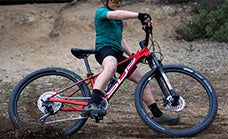
Wheel size is only part of the decision because bike types can have different frame shapes and riding positions. A children’s mountain bike may have a higher standover height, so pay close attention to inseam clearance even when the wheel-size guidance looks right. Its more upright position should still let your child reach the handlebars and controls comfortably.

BMX bikes are compact and intended for tricks, so their fit can feel different from a bike chosen for general riding. Children’s road and hybrid bikes are less common and may also use different frame geometry. Rather than applying one fit assumption to every type, consider where your child rides most often and check the fit of the bike suited to that riding.
For example, a child interested in mountain biking may want to look at a bike such as the Polygon Siskiu D24 Kids Mountain Bike. Its name is a starting point for exploring that type of bike, not a substitute for checking your child’s measurements against the individual frame.
What If My Child Is Between Sizes?
If your child falls between sizes and is closer to the smaller size, choose the bike they can control comfortably now. If they are closer to the larger size and are an experienced rider, the larger bike may work, but only if standover clearance, reach and control are already right. Adjustable seat height or handlebar position cannot make an oversized frame safe to stand over.
Resist buying a bike that is too large solely so your child can grow into it. Difficulty reaching the ground or controlling the bike can make riding less safe and less enjoyable. A correctly sized bike with room to adjust its seat post and, where possible, its handlebars offers a better way to accommodate growth.
Adjustability and Growing Room: What to Look For
Children grow, so useful adjustment range matters. Check whether the seat post can be raised as your child gets taller and whether handlebar height or position can be adjusted on the bike you are considering. Some bikes may also allow a change in stem length. These options can help a bike remain comfortable as your child grows, potentially extending its usable life by 6 to 12 months, depending on the child and the bike.
Look at the starting position as well as the available range. If the seat post is already at its maximum height when you buy the bike, there is little room left to raise it. On the other hand, a bike that requires adjustments beyond a comfortable current fit is not the right size simply because it offers growing room. First establish safe standover and reach, then consider what can be adjusted later.
Safety Considerations When Sizing a Kids’ Bike
A bike that is too large can be hard for a child to control, particularly when starting and stopping. If they cannot put both feet on the ground when stopped, an oversized bike can increase the risk of a fall. A bike that is too small can also reduce control and lead to discomfort or a cramped riding posture.
Proper fit gives your child a better foundation for balance, confidence and safe riding habits. Where possible, arrange a test ride and watch how they steer, pedal and stop. Check that they can operate the brakes and gears comfortably rather than merely touch them while stationary. If they seem uncertain or stretched, take that seriously even if their height falls within the suggested range.
Sizing for 7-Year-Olds and 5-Year-Olds: A Quick Comparison
Shopping for more than one child? A 7-year-old typically rides a bike with 16-inch or 20-inch wheels, depending on height, with an approximate height range of 110 to 130 cm. A 5-year-old generally rides a 14-inch or 16-inch wheel bike, with an approximate height range of 100 to 120 cm.
These are broad guides, just like the ranges for 10-year-olds. Measure each child’s height and inseam separately, then check their fit on the bike. Age cannot tell you whether one child needs a smaller frame than another of the same age. You can explore kids’ bikes across sizes while keeping those individual measurements at hand.
How to Involve Your Child in the Sizing Process
Your child can tell you things that a size chart cannot. Ask whether the bike feels easy to hold upright, whether reaching the handlebars and brakes feels natural, and whether starting and stopping feels comfortable. During a test ride, watch their body language as well as listening to their answers. Do they look relaxed and in control, or hesitant and stretched?
Let them compare suitable options rather than steering them towards a larger bike for future growth. Feeling comfortable and excited about a bike can encourage regular riding and help them develop skills with confidence. If you can visit a bike shop, professional fitting advice can help you check any uncertainty about frame size or riding position.
Key Takeaways: Choosing the Right Bike Size for Your 10-Year-Old
- Most 10-year-olds fit a 20-inch or 24-inch wheel bike, but age and wheel size are only starting points.
- Measure your child’s height and inseam before comparing bikes, especially if they fall between size ranges.
- Check for 2 to 5 cm of standover clearance, comfortable handlebar and brake reach, and a slight knee bend while pedalling.
- Prioritise the bike your child can control confidently today over one they might grow into later.
- Involve your child in the choice and arrange a test ride or professional fit check where possible.