
 USA
USA







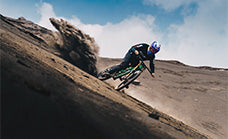




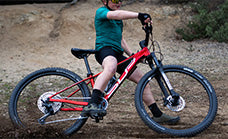


Can You Race Downhill on a Trail Bike? Wendy Tackles Sea Otter DH on the Siskiu T9
|
|
Time to read 5 min
Table of Content
Downhill racing is the wildest form of mountain biking, and we wanted to know if a trail bike could hang with the big rigs. For this challenge we sent Wendy, one of our BikesOnline riders, to the Sea Otter Classic downhill course armed with a Polygon Siskiu T9. The T9 is technically a trail bike, but its capable frame, 150 mm/140 mm travel and modern geometry made us think it might just pull off a DH run. Instead of bringing a separate enduro or downhill bike, we mulleted the T9—fitting a 29-inch wheel up front and a nimble 27.5-inch wheel in the back—to balance high-speed control with agility. Could it work? We decided to find out.
Why choose a trail bike for Sea Otter?
The Sea Otter downhill track isn’t your typical root-strewn, rock-garden DH course. It’s a fast, pedally affair dotted with rhythm sections and doubles. A light, poppy bike that pedals efficiently can be a real advantage. The Siskiu T9 uses our partner brand Polygon’s proprietary alloy frame and Fox 36 suspension. Polygon is one of the few bike brands with its own factory and assembly facilities —forming tubes, machining dies and building nearly half a million bikes each year entirely in-house. That vertical integration means we can offer a high-spec bike like the T9 at a price that beats many carbon competitors[1].
We set the T9 up as a mullet—29er front wheel for rollover and a 27.5-inch rear wheel for manoeuvrability. A large front wheel smooths out rough ground, absorbing bigger hits and giving you more control. The smaller rear wheel helps lower weight, adds extra clearance on steep terrain and sticks to the inside line for improved agility[3]. Combined with fast-rolling tyres and plush suspension, this setup struck a nice balance between stability and playfulness on Sea Otter’s sandy berms and flow sections.
Practice, pro tips and a bit of drama
Wendy’s first practice lap revealed how unforgiving Sea Otter’s rhythm sections can be. Pumping the rollers and carrying speed through doubles requires timing and a keen eye for fast lines. Thankfully she ran into Miranda Miller from Bikes Online Racing, who shared her downhill racing wisdom: pump hard before flats, brake before corners and stay tucked to conserve speed. When deciding whether to double or triple a roller section, Miranda suggested exaggerating your pumps first; if you’re still getting airborne, then consider pulling for a double.
No race weekend would be complete without a mechanical. After practice Wendy discovered a massive dent in her front rim that wouldn’t hold air. With time running out she threw in a tube and kept rolling. The setback cost her a practice session, but she refused to let it ruin the weekend. Those afternoon laps before the race built confidence and reminded her that postpartum riding doesn’t have to slow you down.
Race day verdict
On race day Wendy channelled her nerves into speed. The crowd energy at the top of the course was contagious. Through the early tables and berms the Siskiu T9 felt composed, and on steep straightaways the bike’s efficient suspension let her pedal hard without bogging down. The dreaded rhythm sections still challenged her, but this run was her smoothest yet. She crossed the line in 2:49—good enough for eighth place out of fifteen riders. More importantly, she proved to herself (and us) that you can race a trail bike on a DH track under the right circumstances.
Would a longer-travel bike be faster on a gnarlier, rock-strewn course? Probably. But for a pedally event like Sea Otter, the trail-bike-turned-DH-machine was the perfect tool. The T9’s mullet setup provided enough stability to tackle rough sections while keeping the bike playful and quick on flatter transitions. Finishing mid-pack after months away from racing felt like a victory.
Should you mullet your bike?
Mixed-wheel setups aren’t just a gimmick. A 29-inch front wheel rolls over obstacles with less effort and smooths out the ride. Pairing it with a smaller rear wheel reduces overall weight and drag, making acceleration easier and climbs less taxing. The compact rear wheel also increases clearance between you and the tyre on steep descents and helps the bike carve tighter corners. However, mullet bikes can feel less balanced on climbs and remain a niche within the industry[3]. If you’re curious, the Siskiu T9 makes it easy to try: simply swap rear wheels and enjoy the best of both worlds.
Who is the Siskiu T9 for?
The Siskiu T9 sits at the top of Polygon’s Siskiu T Series. It combines a lightweight alloy frame with 150/140 mm of suspension travel and a Shimano XT drivetrain, plus Fox Performance Elite suspension. It’s perfect for riders who want one bike to tackle everything from local trail loops to occasional enduro races. We also stock the more affordable Siskiu T8 and Siskiu T6, which share the same playful geometry with slightly pared-back components. If you need more travel for enduro or bike-park laps, consider stepping up to the Collosus N series, our dedicated enduro platforms. Want electric assistance? Check out the mullet-equipped Siskiu T7E e-MTB. Browse our full selection of trail bikes and enduro bikes to find your perfect match.
Verdict
Sea Otter proved that you don’t always need a dedicated downhill bike to have fun and be competitive. With smart setup and some practice, a well-designed trail bike like the Polygon Siskiu T9 can handle everything from fast flow to jump lines. Our experiment showed that the mullet configuration delivers surprising control and agility, while Polygon’s in-house manufacturing keeps the price down without sacrificing quality[1][2]. If you’re curious about trying a mixed-wheel trail bike or just want a versatile rig that can race on Saturday and ride mellow trails on Sunday, the T9 and its siblings are hard to beat. Let us know in the comments if you’d like to see Wendy tackle a rockier DH track on this bike or another model— gravel bike not included!
Can a trail bike handle a downhill race course?
Trail bikes can complete certain downhill races, especially on smoother, more pedally courses like Sea Otter. However, they lack the longer travel and slack geometry of dedicated DH bikes, so riders must be prepared to pick lines carefully.
Why would you mullet a trail bike for downhill racing?
Running a 29 inch front wheel with a 27.5 inch rear (mullet) increases rollover and stability up front while retaining agility at the back. This setup helps maintain speed and manoeuvrability on mixed terrain.
What modifications help a trail bike perform better on a DH course?
Upgrading suspension to handle bigger hits, fitting stronger wheels and tyres, and adjusting cockpit setup (bars and stem) for control can make a trail bike more DH■capable.
Is the Siskiu T9 durable enough for downhill racing?
The Siskiu T9’s 150/140 mm travel and robust alloy frame can handle occasional DH runs, but repeated racing on extremely rough tracks may accelerate wear compared with a purpose■built downhill bike.
How does the Sea Otter downhill course differ from typical DH tracks?
Sea Otter’s downhill course is smoother and more pedally, with jumps and rhythm sections. It rewards bikes that pedal efficiently and pump through features, unlike steep, rocky DH courses that demand maximum travel.

Jared Morgan
BikesOnline....


