



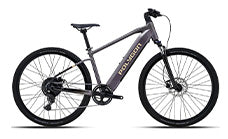




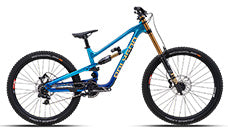















Polygon Siskiu D5 vs D6 vs D7 – Choosing the Right Down-Country Rig
|
|
Time to read 4 min
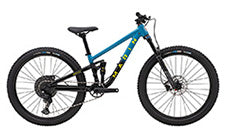
Not all down-country bikes are created equal. Polygon’s Siskiu D range spans three models—D5,D6 and D7—aimed at riders from curious beginners to experienced trail shredders. In this episode we rode each bike and compared how they differ in frame design, drivetrain, suspension and overall ride feel. Although all three share the same balanced geometry and 120 mm travel platform, subtle component choices make a big difference on the trail. Here’s what we learned and which model might suit you best.
Table of Content
Summary: All Siskiu D models use the same hydroformed alloy frame with 120 mm of travel but differ inspec. The entry-level D5 has a 2×9 Shimano drivetrain, quick-release rear axle and coil-sprungSR Suntour fork. The mid-range D6 upgrades to thru-axles, a one-piece suspension linkage, airsuspension front and rear and a 1×10 drivetrain. The top-spec D7 adds a better RockShoxsuspension package, wider range 1×11 gearing and a stiffer wheelset. Both the D6 and D7 comewith dropper posts as standard, allowing you to lower the saddle on descents for better bodypositioning[2]. All models feature tubeless-ready rims so you can run lower tyre pressures forimproved traction and comfort without worrying about pinch flats[1].
Siskiu D - Collection
Frame & wheel differences
Although the geometry is identical across the range—long reach, a slack head angle and shortchainstays for a lively yet stable ride—the rear triangles differ. The D5 uses a quick-release rearaxle and is offered only with 27.5-inch wheels in sizes S, M and L. The D6 and D7 adopt aboost-spacing thru-axle and a one-piece linkage that stiffens the rear end and reduces flex onrough trails. They’re available with 27.5″ wheels in smaller sizes and 29″ wheels in M throughXL, giving taller riders a faster-rolling option. All frames include internal dropper routingshould you wish to upgrade the D5 later.
Drivetrains & brakes
The Siskiu D5 features a Shimano Alivio 2×9 drivetrain with a wide 11–34 tooth cassette. Thisprovides plenty of gears for riders who mix pavement, fire roads and mellow singletrack. Boththe D6 and D7 move to simple 1× drivetrains for trail riding. The D6 uses a Shimano Deore 1×10setup with an 11–46 tooth cassette, while the D7 steps up to an 11-speed Deore system with an11–51 tooth cassette for easier climbing. All models are equipped with hydraulic disc brakes butthe D6 and D7 use more powerful callipers for increased control on steeper trails.
Suspension & dropper posts
Suspension is where the biggest leaps occur. The D5 comes with an SR Suntour XCM coil forkand a matching shock featuring a lockout but no rebound adjustment. The D6 upgrades to airsuspension front and rear—an SR Suntour XCR32 fork and X-Fusion O2 Pro RL shock—givingyou adjustable air pressure and rebound for tuning. The D7 goes further with a RockShox Reconfork and a Deluxe shock offering more support and suppleness. Both D6 and D7 are deliveredwith dropper seatposts; these allow you to lower your saddle using a handlebar-mountedremote so you can get your weight back for descents and raise it again for efficient pedallingwithout stopping[2]. Sizes S and M come with 150 mm of drop, while M–XL 29ers get 170 mmtravel posts.
Wheels & tyres
All three bikes roll on double-wall rims that are tubeless compatible. Running tubeless lets youdrop tyre pressure for better grip and comfort and nearly eliminates pinch flats because there’sno inner tube to pinch against the rim[1]. The D5 and D6 use 24 mm internal-width rims suitedto 2.2–2.3″ tyres, while the D7 upgrades to wider 29 mm rims for 2.3–2.5″ rubber. That extrawidth on the D7 offers a larger contact patch and more stability at low pressures.
Which model should you choose?
D5 – for beginners and budget-conscious riders
The D5 is ideal if you’re new to mountainbiking or ride a mix of paved paths, fire roads and smooth singletrack. Its 2× drivetrain givesyou plenty of gears and the coil fork keeps costs down. You can always add a dropper post andconvert to tubeless later.
D6 – for progressing trail riders
With thru-axles, a stiffer linkage, air suspension and a 1×drivetrain, the D6 hits a sweet spot of performance and value. If you enjoy singletrack and wantto hone your skills on moderate terrain, this model provides the adjustability and control togrow with you.
D7 – for ambitious riders tackling steeper, rougher trails
The D7’s better suspension,wider rims and huge gear range make it the pick for riders who want to push harder, climbeasier and descend with confidence. It’s still affordable compared to many competitors but feelsmuch closer to a high-end trail bike.
How does the D6 suspension differ from the D7?
The D6 uses SR Suntour and X-Fusion air suspension with rebound adjustment, while the D7upgrades to RockShox components offering more support, plushness and a wider range oftuning.
Why would I choose a 2× drivetrain over a 1×?
The 2× system on the D5 offers a very wide gear range with smaller jumps between gears,which is useful for mixed terrain and long climbs. However, 1× drivetrains on the D6 and D7 aresimpler to operate, quieter and have better chain retention.
Do I need a dropper post?
If you ride trails with frequent climbs and descents, a dropper post allows you to lower yoursaddle instantly and improves control on descents[2]. The D6 and D7 include droppers from thefactory; the D5 can be upgraded easily.
Why run tubeless tyres?
Tubeless setups allow you to use lower tyre pressures, which improves traction and comfortwhile minimising the risk of pinch flats or punctures【305526716628338†L231-L235】.
Can I upgrade the D5 later?
Yes. The D5 has internal dropper routing and a tubeless-ready wheelset, so you can add adropper post and convert the tyres as your riding evolves.

Jared Morgan
BikesOnline....


