



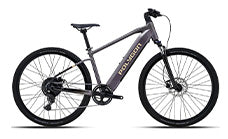

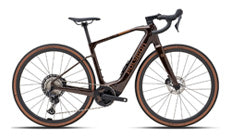







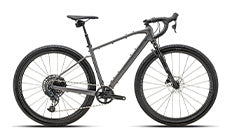














Polygon Strattos VS Helios A | Climbing or Aero Bike?
|
|
Time to read 3 min
Choosing between an all-round road bike and an aero race bike can be tough, especially whenboth come from the same brand. To answer the question we hear most often—should you buya Polygon Strattos or a Helios A?—I took both bikes down to Wollongong for back-to-backtesting. In this head-to-head review I’ll share what makes each bike unique, how they ride inthe real world and which riders will benefit most from each model.
Table of Content
Summary: The Helios A is a purpose-built aero race bike with a stiff carbon frame, integrated carboncockpit and deep-section carbon wheels. It feels fast and efficient on flat roads and in sprints,but that stiffness means it sacrifices a bit of comfort on long rides[3]. The Strattos, on the otherhand, is a more versatile road bike with alloy wheels that feature higher spoke counts for addedcompliance, a standard handlebar and stem for easier fit adjustments, and more uprightgeometry. It may not have the outright speed of the Helios, but it’s lighter on climbs, smootherover rough roads and considerably more affordable. Both bikes use hydraulic disc brakes withreach-adjustable levers[1] and tubeless-ready rims for better grip and fewer flats[2].
Road Bikes
Helios A – built for speed
Right away, the Helios A feels every bit the race bike it was designed to be. The aero carbonframe and fork are shaped to slice through the wind, and all cables are routed internally for asuper-clean look. An integrated one-piece carbon handlebar and stem create a stiff front endand a seamless transition between bar and frame. The bike rolls on deep 50 mm carbon wheelsfrom Entity that maintain speed on the flats and feel planted in crosswinds. Our test bike wasfitted with Shimano’s Ultegra Di2 12-speed drivetrain for buttery-smooth shifting and acompact 50/34 chainset that lets you maintain high cadence on rolling terrain. According toracing bicycle design principles, race bikes prioritise minimising aerodynamic drag, rollingresistance and weight while balancing stiffness for pedalling efficiency[3]—and the Heliosepitomises that philosophy.
Strattos – everyday versatility
The Strattos has been Polygon’s go-to all-round road bike for years, and it shows in the way itbalances comfort, climbing ability and everyday practicality. Instead of deep carbon wheels, theStrattos uses alloy rims with 28- or 30-spoke counts that add a bit of compliance and durabilityfor rougher roads. The separate handlebar and stem make it easy to fine-tune your fit, and theslightly taller head tube puts you in a more upright, endurance-friendly position. Our Strattostester came with Shimano 105 mechanical shifting and mid-depth alloy wheels that acceleratequickly on climbs. When you get out of the saddle, the bike feels stable and composed, makingit a great choice for long rides or mixed terrain. Both the frame and fork are compatible withwider tyres and tubeless setups, so you can improve comfort and grip by running lowerpressures[2].
Ride impressions & which to choose
On the road, the differences between these bikes are noticeable. The Helios A surges forwardwith every pedal stroke; its stiff frame and deep wheels encourage you to stay in an aero tuckand push big gears. It excels on flat and rolling terrain, where its aerodynamic advantage letsyou carry more speed with less effort. However, after a few hours in the saddle you’ll feel moreroad buzz compared to the Strattos, and on steep climbs the extra weight of the deep wheelsbecomes apparent. The Strattos, by contrast, feels lively and comfortable. It spins up quickly onclimbs, handles rough pavement with ease and offers a more relaxed riding position. If you’replanning century rides or weekend adventures with friends, the Strattos will likely leave youfresher at the finish. Ultimately, choose the Helios A if racing and top-end speed are yourpriorities[3]; choose the Strattos if you value comfort, versatility and value for money.
What makes an aero road bike different from an all-rounder?
Race-oriented road bikeslike the Helios A are designed to minimise aerodynamic drag, rolling resistance and weight, andto provide stiff pedalling efficiency[3]. They use deep wheels and aggressive geometry to helpyou go faster but generally offer less comfort.
Are hydraulic disc brakes worth having on a road bike?
Yes. Hydraulic brakes withreach-adjustable levers provide strong, predictable stopping power and allow riders tomodulate speed with one or two fingers[1].
Should I convert my road bike to tubeless?
Tubeless tyres allow you to run lower pressuresfor improved comfort and grip and help prevent pinch flats[2]. Both the Helios and Strattos arecompatible with tubeless setups.
Do I need an integrated cockpit?
Integrated cockpits like the one on the Helios A improve aerodynamics and stiffness but limit adjustability. A separate bar and stem like those on the Strattos make it easier to dial in fit or swap components.

Jared Morgan
BikesOnline....


![Polygon Strattos S7X - 105 Di2 Carbon Road Bike [XL only]](http://bikesonline.com.au/cdn/shop/files/2025_STRATTOS_S7X_420x420.jpg?v=1755494518)