
 USA
USA




















Trail or Enduro EMTB? | Polygon Collosus N8E vs Siskiu T7E
|
|
Time to read 3 min
Table of Content
Summary: The Polygon Siskiu T7E and Collosus N8E share the same aluminium chassis and Shimano EP801 motor, but their suspension and geometry give them very different personalities. The trail-oriented T7E pairs a 150 mm fork with 140 mm of rear travel and a 65° head angle, making it light on its feet and happy to pop from corner to corner. The enduro-focused N8E adds 20 mm of rear travel and slackens the head angle to roughly 64°, creating a bike that feels planted on rough descents. Modern e-bike geometry—longer reaches, lower bottom brackets and slacker head angles—helps both bikes remain stable despite the extra weight of the motor and battery[1]. If you want a playful do-it-all e-MTB, the T7E is the ticket; if you regularly ride steep, gnarly terrain, the N8E’s extra travel and stability will be worth the weight[2].
The bikes at a glance
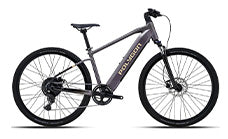
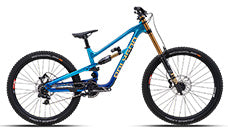
The Siskiu T7E is Polygon’s trail e-MTB. It uses 140 mm of rear suspension travel paired with a 150 mm fork and rolls on 29 inch wheels. Its 65° head tube angle and 485 mm reach (size L) make it agile without feeling nervous. By contrast, the Collosus N8E is an enduro machine with 160 mm of rear travel, a 170 mm fork and a slacker ~64° head angle. The reach grows slightly to 490 mm. That extra travel and slacker geometry are designed to tame high-speed rock gardens and bigger hits. Both bikes share the same Shimano EP801 motor, which delivers up to 85 Nm of torque and 600 W peak power and is paired with a 630 Wh battery for long days on the trail[2].
On the trail
On tight singletrack and rolling terrain, the Siskiu T7E felt surprisingly lively. Modern e-bike geometry—long reaches and slacker head angles—combined with the added weight of the motor and battery give the bike a planted feel without the need for excessive travel[1]. The 140 mm rear suspension provides enough support to soak up roots and rocks while still letting the bike pump through undulations. I found myself popping off trail features and carrying speed with ease. When the trail steepened and the rocks got bigger, the Collosus N8E came into its own. The extra rear travel and slacker head tube angle gave me confidence to charge down technical descents. It held a straighter line through rock gardens and felt more stable on jump landings. The flip side is that it doesn’t accelerate quite as quickly out of corners and feels a bit more cumbersome on mellow terrain. For riders who prioritise downhill performance, the N8E is the clear choice.
Factory team perspective
To get another point of view, I rode with Polygon Factory Racing rider Dan Wolf. He was impressed by how capable the trail bike was on Bright’s alpine trails. Dan noted that for the majority of riding in the UK or Australia he would choose the T7E because it’s more playful and manoeuvrable. His take reinforced my impression that the trail e-MTB will suit more riders more of the time.
Verdict
If your rides are a mix of flow trails, technical climbs and occasional rough descents, the Siskiu T7E will keep you smiling with its balance of stability and playfulness. Riders who live for steep, rough descents or bike-park laps will appreciate the Collosus N8E’s extra travel and planted feel. Both bikes offer impressive value thanks to Polygon’s direct-to-consumer pricing model[3], so you can choose the travel that best matches your local terrain and riding style.
What’s the main difference between trail and enduro e-MTBs?
Trail e-MTBs like the Siskiu T7E use shorter travel (around 140 mm) and slightly steeper head angles (~65°) to prioritise agility and all-round capability. Enduro models like the Collosus N8E add travel (around 160 mm) and slacken the head angle (~64°) for greater stability at speed and on rough descents[1].
How does the motor affect the ride?
Both bikes are powered by Shimano’s EP801 motor. It produces up to 85 Nm of torque and around 600 W peak power and is paired with a 630 Wh battery. The extra weight of the motor and battery helps calm the bike on rough terrain, and the motor’s tune makes steep climbs feel much easier[2].
Is a longer travel e-bike harder to climb?
The extra travel and slacker geometry of an enduro e-MTB can make it feel a little less efficient on mellow climbs, but the motor largely offsets the difference. For tight switchbacks or technical climbs, the trail bike’s shorter wheelbase and lighter feel will usually be easier to handle[1].
Which bike offers better value?
Both bikes benefit from Polygon’s direct-to-consumer model, which removes traditional distribution layers to keep prices competitive[3]. Your choice should be based on the type of terrain you ride most often rather than cost alone.

Jared Morgan
BikesOnline....


