
 USA
USA







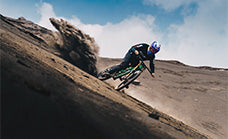















How To Hit Doubles & Jump With CONFIDENCE!
|
|
Time to read 5 min
Table of Content
Summary: If you want to master gap jumps and doubles, start with the basics. Practise loading your body and bike by bending your knees and compressing before you lift. Simple drills like front and rear wheel lifts, bunny hops and bump jumps build the body mechanics needed to transfer energy into the bike. Set your bike up for success by lowering the seat, running proper sag and balanced rebound damping, and keeping tire pressures around 20-25 psi. When learning, begin on small tabletops: absorb the lip at low speeds until you feel where the bike wants to take flight, then release your compression at the lip for lift. Gap jumps use the same technique; look past the gap, commit to your speed and compression, and plan to land on or beyond the transition. Keep your head calm, never rush a jump when you’re tired, and remember that progression comes from practice, patience and proper technique.
Siskiu T - Collection
Body Mechanics & Drills
Before you even roll up to a jump, take time to understand how your body creates lift. Instructor Jeremiah “Scratch” Stone explains that you should practise jumping on flat ground without your bike. Try jumping with straight legs, then with knees slightly bent and finally with knees fully bent; the deeper the bend, the higher the jump. This exercise shows that all lifts, whether it’s a front or rear wheel lift, a bunny hop or a full jump, require a controlled compression of your body and bike[1]. To build this skill on the bike, start with front and rear wheel lifts. Stone notes that these help you develop a strong, even compression through your feet and teach you to control that energy as it’s released[1]. He likens the motion to stomping the bike into the ground before lifting the front or rear wheel. Once you’re comfortable, progress to bunny hops and bump jumps. In a bunny hop you load the bike and body, hold tension in the back wheel and then release it to create an arc through the air[1]. Bump jumps use a small root or PVC pipe to pre-load the bike, doubling the height you can achieve and fast tracking your sense of timing[1].
Bike Setup & Preparation
Good jumping begins with a bike that’s set up correctly. Stone recommends lowering your seat as far as it will go so it doesn’t get in the way[2]. Set your suspension sag to the manufacturer’s recommended range (typically 25-30 percent) and balance rebound damping front and rear so the bike returns evenly after compression[2]. Don’t lock out your suspension; keeping it open allows the suspension to work with you as you compress and release[2]. Finally, adjust tire pressures to around 20- 25 psi, adding a few extra psi if you’re really pushing into a jump line[2].
Start Small: Practise on Tabletops
Stone advises learning to jump on small tabletops where you can safely roll over the deck without consequence. Begin by approaching the jump slowly and “keeping your head and torso quiet,” letting your limbs absorb the motion[3]. Ride the jump a few times, absorbing the lip and landing on the table to feel where the bike wants to go light[3]. When you’re ready to leave the ground, release your compression at the lip; think of the lip as a bump you’re pushing off of, then add more pressure through your feet and the bottom bracket to feel the pop[3]. In the air, absorb the bike into your body like you’re in a low ready position, then push it back down through your feet to match the landing grade[3]. Practising this sequence over and over on a tabletop builds muscle memory and confidence.
Hitting Doubles & Gap Jumps
Gap jumps and doubles use the same fundamentals, with a crucial mental twist. Stone says the key is not to fixate on the gap; don’t even look at it[4]. Approach the feature with the speed and compression needed to clear the distance and plan to land on or beyond the transition. It’s better to overshoot slightly than come up short[4]. To find the right speed, calm your mind and respect that it’s easier to add a little speed than to scrub it off mid-approach[4]. If your bike drifts sideways in the air, it’s often because you yanked on takeoff instead of compressing smoothly through your feet[4]. Most importantly, listen to your body: take breaks when you’re tired and never insist on “one last jump.” Fear stiffens you and reduces your range of motion, while riding on hope alone leads to sloppy mistakes; instead, build a plan based on skills and stay active to follow through[4].
Verdict
Jumping and hitting doubles isn’t about bravado; it’s about skill and preparation. By working on body mechanics, setting your bike up properly and practising on safe features, you’ll build the control and timing needed to tackle gaps confidently. Keep your mind calm, respect the process and progress at your own pace. Before long, those intimidating gaps will be just another fun feature on your trail rides.
What’s the difference between a tabletop and a double?
A tabletop jump has a deck you can roll over or land on; you can practise jumping safely without leaving the ground. A double has a gap between the takeoff and landing, so you must clear the distance. The technique is the same, but doubles require more speed and commitment to avoid coming up short.
How do I know if I’m ready to try a gap jump?
If you can consistently clear small tabletops by releasing your compression at the lip and matching the landing grade, you’re likely ready to attempt small doubles. Start with very short gaps where overshooting is safe, and gradually increase the distance as your control and timing improve.
How can I practise jumping safely?
Work on wheel lifts, bunny hops and bump jumps to refine your body mechanics. Start on small, rollable tabletop jumps so you can absorb the lip and land on the deck if needed. Always ride within your ability, take breaks when you’re tired and practise with a friend who can spot you.
Why does my bike drift sideways when I jump?
Drifting usually means you yanked on the handlebars during takeoff. Instead, focus on compressing smoothly through your feet and the bottom bracket, then releasing that pressure at the lip. A balanced rebound setting will also help the bike return evenly and prevent it from kicking sideways[2].

Jared Morgan
BikesOnline....


